- Johnny, Alt & Alt
- April 13, 2026
How to Choose the Best Gutter System for Your Home in 2026
The best gutter system for your home isn’t the one that looks nice from the curb. It’s the one that actually moves water away from your foundation, holds up through Ohio winters, and doesn’t turn into a full-time maintenance job by October. Get it wrong and you’re dealing with foundation damage, rotted fascia boards, flooded basements, and landscaping that looks like a swamp after every rain. Get it right and you barely think about it for decades.
At Alt and Alt LLC, we’ve installed and repaired gutter systems across Munroe Falls, OH and the greater Northeast Ohio area for years. We know what works here and, just as importantly, what doesn’t. This guide covers everything that actually matters, from material and style to sizing, gutter guard options, and what Ohio’s climate means for every decision you make.
Key Takeaways
- Seamless aluminum gutters are the most practical choice for most Ohio homes
- Sizing matters more than most homeowners realize, undersized gutters cause most overflow problems
- Gutter guard options vary widely in quality and are worth the investment in Ohio’s tree-heavy neighborhoods
Why Your Gutter System Matters More in Ohio
Most homeowners don’t think about their gutters until something goes wrong. A leak shows up in the basement. Paint starts peeling on the fascia. The landscaping along the foundation turns into a muddy mess after every rain. By the time those signs appear, the damage is usually already done.
Ohio averages about 38 inches of rain per year, plus real snowmelt in late winter and early spring. That’s a lot of water your gutters have to handle. And Northeast Ohio’s freeze-thaw cycles pile on another layer of stress. Ice dams at the roofline can push water back under shingles, and gutters that are already struggling on capacity get even worse when ice is part of the equation.
The National Association of Home Builders says water intrusion is one of the top causes of structural damage in residential homes. Most of it is preventable with a properly sized, correctly installed gutter system. Most of it.
At Alt and Alt LLC, every gutter assessment starts with three things: your roof’s drainage load, your lot’s grading, and the trees around your home. Those three factors shape every other decision.
Gutter Materials: What’s Actually Worth Your Money
This is where most homeowners either nail it or set themselves up for problems years down the road. Here’s an honest look at each option, no brand loyalty involved.
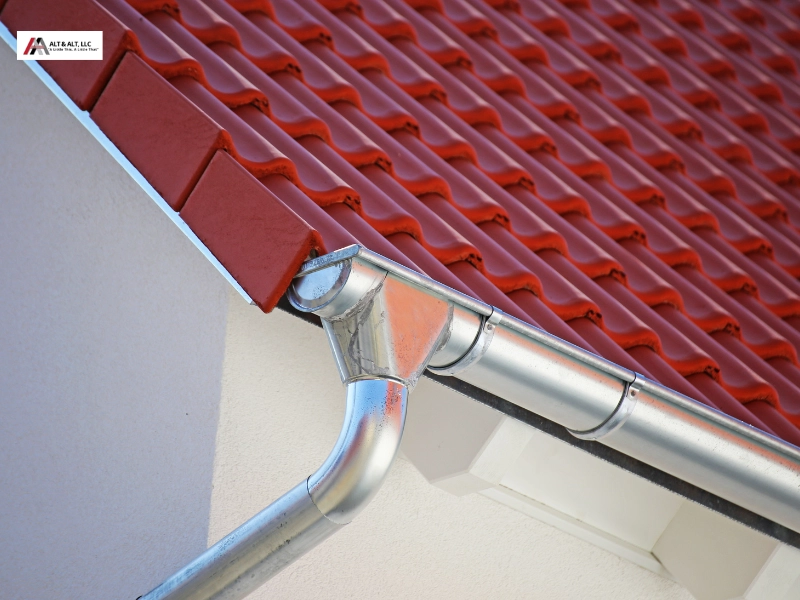
Aluminum Gutters
Cost: $6–$12 per linear foot installed Lifespan: 20–30 years
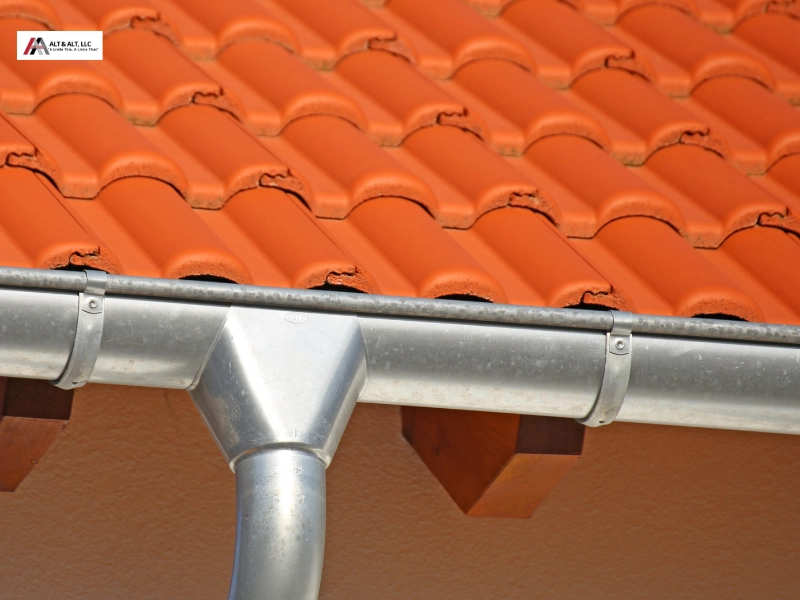
Aluminum is the most popular gutter material in Ohio, and there’s a real reason for that. It’s lightweight, rust-resistant, comes in a wide range of colors, and handles freeze-thaw cycles without cracking. Seamless aluminum gutters are fabricated on-site to fit your exact roofline, which eliminates the joints where most leaks start.
For the vast majority of Ohio homes, seamless aluminum is the right call. It’s the best gutter system choice that balances cost, durability, and low maintenance without forcing you to compromise on any of the three.
Copper Gutters
Cost: $25–$40 per linear foot installed Lifespan: 50+ years
Copper gutters look great. They develop a natural patina over the years that’s hard to replicate with any other material, and they last a very long time. The downside is cost. Copper runs three to four times more than aluminum, and installation takes real skill. For historic homes or high-end builds where aesthetics are a priority, copper is worth talking about. For most standard homes in Munroe Falls, OH? It’s overkill.
Steel Gutters
Cost: $9–$20 per linear foot installed Lifespan: 20–30 years
Galvanized steel is stronger than aluminum, which matters if you’ve got heavy snow loads or large tree branches hanging close to the roofline. The trade-off is rust. If the protective coating wears down, galvanized steel will corrode. Stainless steel skips that problem but the cost climbs significantly. Steel makes sense in specific situations but it’s not the go-to for most Ohio homes.
Vinyl Gutters
Cost: $3–$6 per linear foot installed Lifespan: 10–20 years
Vinyl is cheap. It’s also the worst option for Ohio’s climate, and we’ll just say that plainly. Vinyl gutters crack in extreme cold, which is exactly what Northeast Ohio serves up every single winter. They sag, the seams fail, and they rarely hit the lifespan numbers on the label. Unless budget is an absolute dealbreaker, we’d steer most homeowners away from vinyl.
Gutter Styles: K-Style vs Half-Round
Beyond material, the profile of your gutters affects how they look and how much water they can actually move.
K-Style Gutters
K-style is the most common residential gutter profile in the country. Flat back, decorative front that mimics crown molding, and more water capacity than half-round at the same width. A 5-inch K-style gutter handles roughly 1.2 inches of rainfall per hour. A 6-inch handles considerably more. For most Ohio homes with standard rooflines, K-style in 5 or 6 inches is the right fit.
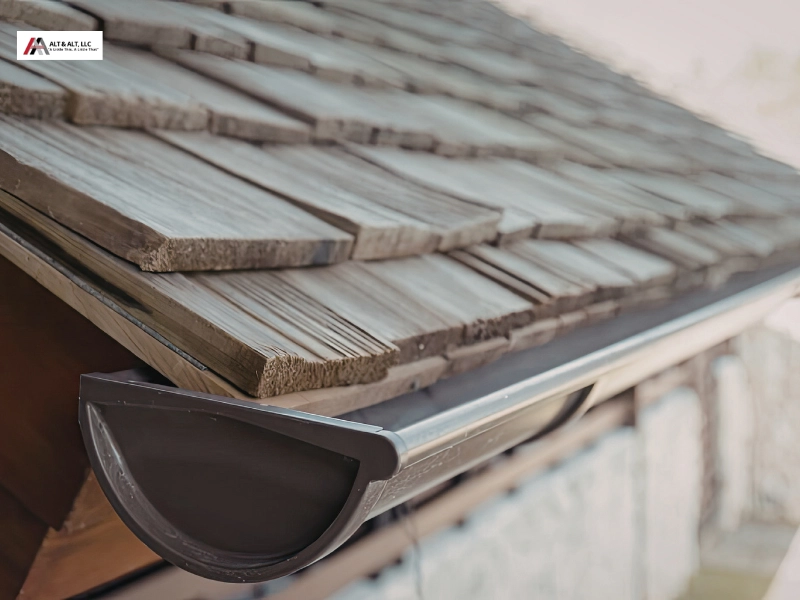
Half-Round Gutters
Half-round gutters have a curved, open profile you see most often on older and historic homes. Water flows through them slightly better than K-style because there are no corners to catch on, but they hold less volume at the same width. They’re also harder to find guards for. Half-round works well on certain architectural styles but isn’t our first recommendation for new installations.
Getting the Size Right
This is honestly where a lot of gutter projects go sideways. Most homes default to 5-inch gutters, but homes with steep roof pitches, large drainage areas, or heavy tree coverage often genuinely need 6-inch gutters to keep up with peak rainfall. Undersized gutters are the most common reason we see chronic overflow problems in Northeast Ohio.
Alt and Alt LLC calculates the right gutter size based on your roof’s square footage, pitch, and drainage zones before recommending anything. It’s not a one-size-fits-all decision, and anyone who treats it that way is cutting corners.
Best Gutter System for Ohio’s Climate
Ohio’s weather has specific demands that most generic gutter guides just don’t address. Here’s what actually matters when you live here.
Freeze-Thaw Performance
Water expands when it freezes. Gutters that hold standing water, whether from poor slope or inadequate downspout placement, will crack and pull away from the fascia over time. Seamless aluminum handles freeze-thaw better than sectional gutters because there are fewer joints to fail. Proper slope matters too. At least a quarter inch of drop per 10 feet of run keeps water moving instead of sitting.
Ice Dam Considerations
Ice dams happen when heat escaping through the roof melts snow, which then refreezes at the cold eave. The ice can push water back under shingles and into the home. Gutters don’t cause ice dams, but damaged or poorly installed gutters make everything worse. Alt and Alt LLC checks fascia boards and eave condition as part of every gutter installation so the system is ready for winter before winter arrives.
Heavy Rainfall and Drainage
Spring in Northeast Ohio brings serious rain events. According to Weather.gov, Ohio can see 3 to 4 inches of rain in a single storm. Downspout placement, sizing, and extensions all play into how well the system handles those peaks. We typically recommend one downspout per 30 to 40 linear feet of gutter, with extensions that carry water at least 6 feet from the foundation.
Gutter Guard Options: Are They Worth It?
Short answer: yes, for most Northeast Ohio neighborhoods. Longer answer: it really depends on what’s growing around your home.
Ohio is heavily wooded in a lot of communities. Stow, Munroe Falls, Hudson, Cuyahoga Falls, these are places where leaves, pine needles, and seed pods are just part of the seasonal reality. Without protection, gutters fill up fast and need cleaning two to four times a year. Guards change that math significantly.
Types of Gutter Guards
Micro Mesh Guards are the top performers, full stop. A fine stainless steel mesh over an aluminum frame blocks virtually everything, shingle granules, pine needles, seeds, while letting water pass through freely. They cost more, typically $15–$25 per linear foot installed, but they need the least attention long term.
Perforated Aluminum Guards are a meaningful step down in performance and price. They keep out large debris well but smaller material can get through. A reasonable option for homes where trees aren’t hanging directly overhead.
Foam and Brush Inserts trap debris inside the gutter instead of keeping it out. Skip them entirely.
When it comes to gutter guard options, the right pick depends on your tree situation, roof type, and budget. Alt and Alt LLC looks at all of that before recommending anything. If you’re exploring gutter installation in Munroe Falls, we’ll match you with guards that fit your actual environment, not just whatever’s easiest to sell.
Repair or Replace? Here’s How to Tell
Not every gutter problem needs a full replacement. And not every repair is worth the money either. Here’s a clear breakdown so you know which direction to lean before you call anyone.
Factor | Repair | Full Replacement |
Age of Gutters | Under 10 years old | 20+ years old |
Damage Scope | Isolated to one or two sections | Widespread across multiple sections |
Sagging | One area from debris buildup | Multiple sections pulling away from fascia |
Leaks | Small cracks or holes in solid gutter | Seams failing in more than one location |
Overflow | Single spot during heavy rain | Multiple spots during moderate rain |
Fascia Condition | Minor staining in one area | Rot or water damage along the full run |
Downspouts | Clogged or disconnected | Incorrectly sized or poorly placed throughout |
Overall System | Mostly intact, good structure | Undersized from original installation |
Best Move | Targeted fix now prevents bigger problems | New seamless system costs less than repeated repairs |
Not sure which bucket you’re in? Alt and Alt LLC will give you a straight answer. If a repair is all you need, that’s exactly what we’ll tell you.
Why Alt and Alt LLC Is the Right Choice for Your Gutters
There’s no shortage of gutter companies in Northeast Ohio. Most of them are primarily interested in closing the sale. Fewer are actually interested in solving your water management problem.
Alt and Alt LLC takes a different approach. We start with a thorough look at your roof drainage, downspout placement, foundation grading, and the trees around your property. We look at the whole picture before recommending a single product. That matters more than most homeowners realize.
We Know Northeast Ohio’s Conditions
We’ve put gutters on homes from Munroe Falls to Cuyahoga Falls, from Stow to Hudson. We know how Ohio winters stress gutter systems. We know which products hold up after a few hard freeze-thaw cycles and which ones don’t. That local experience is worth more than a national brand name on the side of a truck.
Written Quotes, No Surprises
Every project starts with a free assessment and a written quote that covers everything. Materials, labor, downspout placement, guard installation if applicable, cleanup. What’s on the quote is what shows up on the invoice. No surprises halfway through the job.
Workmanship Backed by a Real Warranty
Alt and Alt LLC stands behind every installation with a written workmanship warranty. If something isn’t right after the job is done, we fix it. That’s not a tagline. It’s how we’ve built our name in this area over the years.
Frequently Asked Questions
1. What is the best gutter system for Ohio homes?
Seamless aluminum K-style gutters in 5 or 6-inch are the best gutter system for most Ohio homes. They handle freeze-thaw cycles well, resist rust, and manage Ohio’s heavy rainfall effectively when properly sized.
2. How much does gutter installation cost in Munroe Falls, OH?
Most homeowners in Munroe Falls, OH pay between $1,000 and $2,500 for seamless aluminum gutter installation. Final cost depends on linear footage, downspout count, and whether gutter guards are included.
3. What are the best gutter guard options for homes with pine trees?
Micro mesh guards are the top pick. Pine needles slip through perforated guards but are stopped by micro mesh. Expect to pay $15–$25 per linear foot installed for quality micro mesh products.
4. How often should gutters be cleaned in Ohio?
Without guards, two to four times per year. With quality micro mesh gutter guards, annual inspection is usually enough.
5. How do I know if my gutters are the wrong size?
Water spilling over the front edge during a moderate rain event is the clearest sign. It usually means the gutters are undersized, improperly sloped, or both.
Conclusion
Choosing the best gutter system for your Ohio home comes down to material, style, sizing, and whether the installation actually accounts for your local conditions. Seamless aluminum is the practical everyday choice. Sizing it correctly matters more than most people realize. And in a region like Northeast Ohio with heavy tree cover and real winters, gutter guard options are an investment that pays off.
What ties all of it together is getting it installed by someone who actually knows what Ohio’s weather does to a gutter system over time.
Ready to Get the Right Gutter System for Your Home?
We serve homeowners throughout Munroe Falls, OH and the greater Northeast Ohio area. Free assessments, written quotes, and gutter installation done right the first time.
Contact Alt and Alt LLC today for a free gutter estimate.
Call us at (330) 999-2669